
Neurodivergent-Friendly Hotels in Europe: 10 Hotels Getting Inclusive Travel Right
For most of us, a holiday is supposed to be the escape.
But if you’re neurodivergent, or travelling with someone who is, some of the things that come with going away can be anything but relaxing.
The airport. The queues. A different routine. An unfamiliar bedroom. A huge buffet restaurant. Music around the pool. Children's entertainment. Bright lights. Crowds. Not knowing exactly what is going to happen when you arrive.
And while the travel industry has made huge strides when it comes to physical accessibility, sensory and cognitive accessibility haven't always received the same attention.
Thankfully, that's beginning to change.
Hotels across Europe are starting to introduce sensory rooms, visual communication aids, Social Stories, sensory maps, specialist staff training and even bedrooms specifically designed around sensory needs.
I've been looking at the hotels going beyond simply describing themselves as “autism friendly” and asking a much more important question:
What do they actually offer neurodivergent travellers?
Here are ten that genuinely caught my attention.
1. TUI BLUE Nausicaa Beach — Protaras, Cyprus
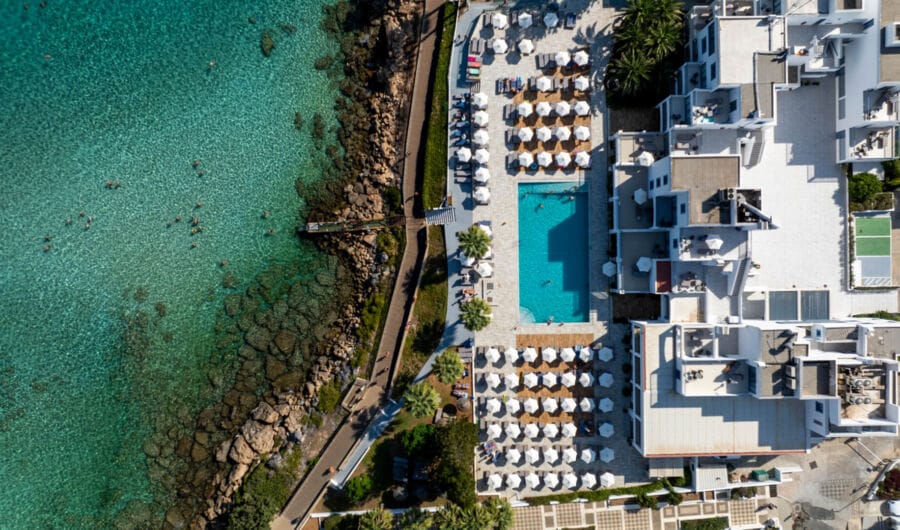
A family resort where neuroinclusive support is becoming part of the holiday, not an afterthought
TUI BLUE Nausicaa Beach is in Protaras, one of Cyprus's most popular family resorts, and is an All Inclusive property designed very much around family holidays.
What makes Nausicaa particularly interesting for this guide is that it was one of the original TUI BLUE hotels chosen for the company's sensory-room initiative.
The sensory room provides an open-access, low-stimulation environment away from the busier areas of the resort. TUI describes these rooms as incorporating soft lighting, interactive sensory equipment and quieter zones where children can regulate their emotions or simply take some time away from everything happening outside.
But it's actually the support beyond that room that makes Nausicaa worth talking about.
TUI has partnered with specialist SEN childcare agency SENNIES to develop its approach to neuroinclusive childcare. Kids' Club teams receive neurodiversity training and have access to visual supports and communication cards that can help children express their wants and needs without relying entirely on verbal communication.
There are also sensory bags available to borrow. These contain a mixture of tactile, visual and auditory resources, including ear defenders, designed to help children self-regulate both inside and outside the Kids' Club.
A designated Neurodiversity Champion acts as a knowledgeable point of contact within participating hotel teams.
There are dedicated sensory activities too. Parent & Baby Sensory Adventure sessions offer calm sensory play for babies and toddlers, while Sensory Connections gives families with older children an opportunity to take part in activities together outside the traditional Kids' Club setting.
For families who've previously found children's clubs difficult because of communication, transitions or sensory overload, those seemingly small adjustments could make a significant difference.
And importantly, the rest of the family still gets a proper Mediterranean holiday.
Who could it suit?
I'd particularly consider Nausicaa for families who want a traditional resort holiday — sunshine, swimming, children's activities and plenty happening — but know their child sometimes needs to withdraw from the stimulation.
It could also be worth exploring for children who want to participate in Kids' Clubs but need additional communication or sensory support to do so.
Worth knowing: A sensory room doesn't make an entire resort low-sensory. Restaurants, pools and entertainment areas can still become busy, particularly during school holidays. If noise, crowds, food or room location are significant concerns, I'd want those individual needs discussed before booking.
2. TUI BLUE Atlantica Aeneas Resort — Nissi Beach, Cyprus
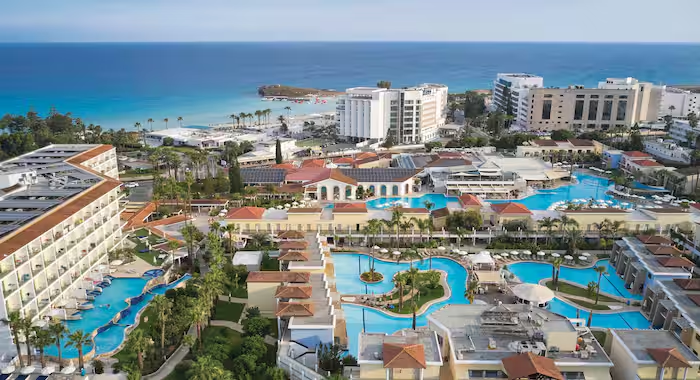
Big family-resort facilities with somewhere to escape the buzz.
If one family member wants water slides, activities and entertainment while another needs the option to get away from all of that, TUI BLUE Atlantica Aeneas is particularly interesting.
Located around 90 metres across the road from Nissi Beach and approximately 2.5km from Ayia Napa, this is a large family resort set among landscaped gardens.
And when I say large, I mean it.
There are six outdoor swimming pools, including one of the biggest main pools in Cyprus.
Children get a pirate-themed pool with slides, water jets and a tipping barrel, plus there's a separate baby pool. Adults can retreat to the quieter adults-only Serenity Pool, and there's an indoor pool too.
There are four restaurants, a Kids' Club, organised activities and a spa, so this isn't a specialist hotel where the family has to compromise on the actual holiday to access additional support.
Atlantica Aeneas is now one of TUI BLUE's sensory-room hotels, meaning families have access to the same wider neuroinclusive programme: a dedicated low-stimulation sensory room, sensory bags, neurodiversity-trained childcare teams, communication cards, visual supports and a Neurodiversity Champion.
That's an important combination in a hotel of this size.
A large resort can provide lots of choice, which some neurodivergent travellers absolutely love.
But lots of people, music, activities and movement can also mean lots of sensory input.
Being able to move between those two environments without leaving the resort is what makes this one stand out.
Who could it suit?
Families with different sensory needs within the same group.
A sensory-seeking child might adore the pools, slides and activities, while a sibling who becomes overwhelmed more easily has somewhere quieter available.
It's also potentially a good option when parents or siblings don't want a very small, quiet hotel simply because one member of the family has additional needs.
Worth knowing: This is a large, activity-filled resort. For somebody who finds busy environments difficult throughout the entire day, I'd look carefully at room location, restaurant arrangements and travel dates before deciding it's the right fit.
3. TUI BLUE Tropical — Sarigerme, Turkey
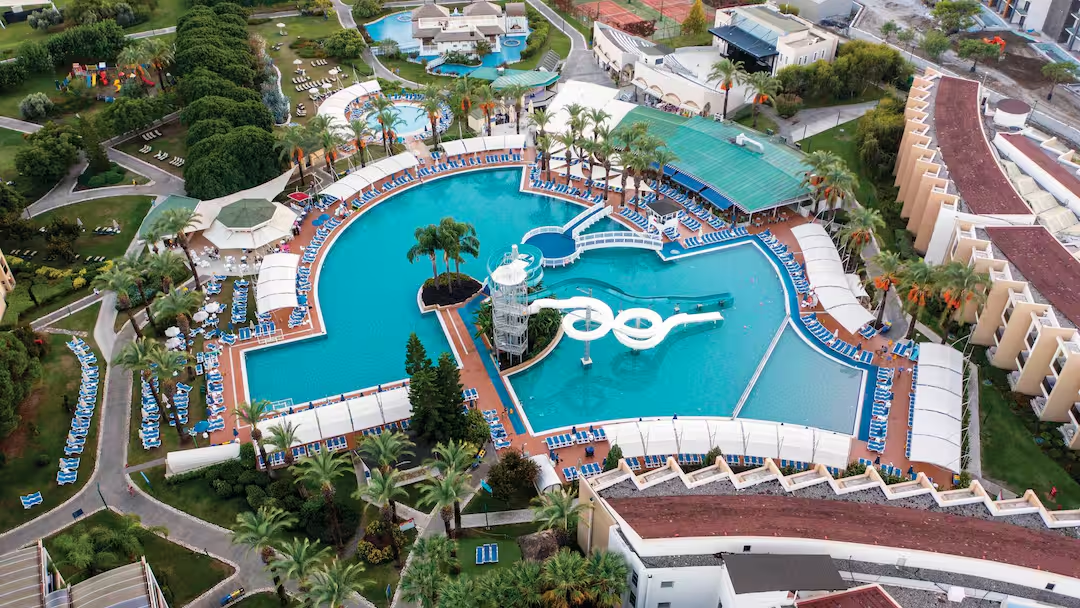
A beachfront All Inclusive resort with both high-energy and quieter spaces
TUI BLUE Tropical sits directly beside the beach in Sarigerme and is another resort where the facilities are extensive.
The main lagoon-style swimming pool has two waterslides, while children have additional pools of their own. There's also a dedicated relaxation pool and an indoor pool.
Dining is spread across four restaurants, combining buffet and à la carte options, while the family programme includes children's activities and Kids' Clubs.
It's part of TUI BLUE's Family Fun collection, so this is very much aimed at families who want plenty to do.
And that makes the addition of neuroinclusive facilities particularly useful.
Tropical now has one of TUI's dedicated sensory rooms, providing a softer, low-stimulation environment when the main resort becomes too much.
The wider SENNIES-supported programme means sensory bags, trained childcare staff, visual supports and communication aids are also available.
Rather than asking neurodivergent children to adapt to the same holiday environment as everybody else, the idea is beginning to shift towards giving families different ways to experience the same resort.
Who could it suit?
Families who enjoy All Inclusive resorts and want lots of activities but the reassurance of a regulation space.
It could work particularly well where a child loves water, movement and physical activity but needs somewhere to decompress afterwards.
The separate relaxation pool may also be worth exploring for families looking for an alternative to the busiest pool areas, although age restrictions and access should always be confirmed.
Worth knowing: All Inclusive buffet restaurants can be a significant sensory challenge in their own right. If food predictability, textures, noise or queues are an issue, I'd want to investigate dining arrangements as carefully as the sensory facilities.
4. TUI BLUE Orquídea — Gran Canaria
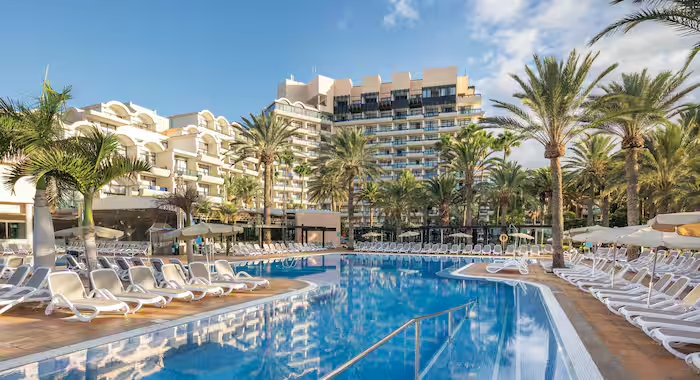
Year-round sunshine with an impressive family set-up and dedicated sensory support
Gran Canaria is one of those destinations that works particularly well for families wanting sunshine outside the traditional summer season, so seeing TUI expand its neuroinclusive programme into the Canary Islands is significant.
TUI BLUE Orquídea sits beside the sea in Bahia Feliz and has three swimming pools, plus dedicated children's facilities.
Little ones get a splash pool with slides, fountains and a tipping bucket as well as a partially shaded baby pool. Adults and stronger swimmers have additional pool options, including an adults-only sports pool in the spa area.
There are three restaurants, a Kids' Club, organised entertainment and activities, plus a spa for adults.
Orquídea is one of four neighbouring TUI BLUE properties in Gran Canaria to receive a sensory room as part of the 2026 expansion of the programme.
Again, that means more than just the physical room. Families at participating TUI BLUE hotels can benefit from trained Kids' Club teams, sensory bags, communication cards, visual supports and dedicated neuroinclusive activities.
The hotel also offers swimming sessions for children, adding another structured activity option for youngsters who love being in the water.
Who could it suit?
Families wanting a Canary Islands holiday with substantial family facilities, particularly outside the peak European summer.
It may also suit families who find having lots available within the resort helpful because it reduces the need to constantly navigate unfamiliar places elsewhere.
Worth knowing: Splash parks, Kids' Clubs and family entertainment naturally create noise and activity. If someone needs a consistently quiet environment rather than simply access to a quiet retreat, I'd look at the wider Bahia Feliz complex very carefully before booking.
5. Hillgrove Hotel & Spa — Monaghan, Ireland
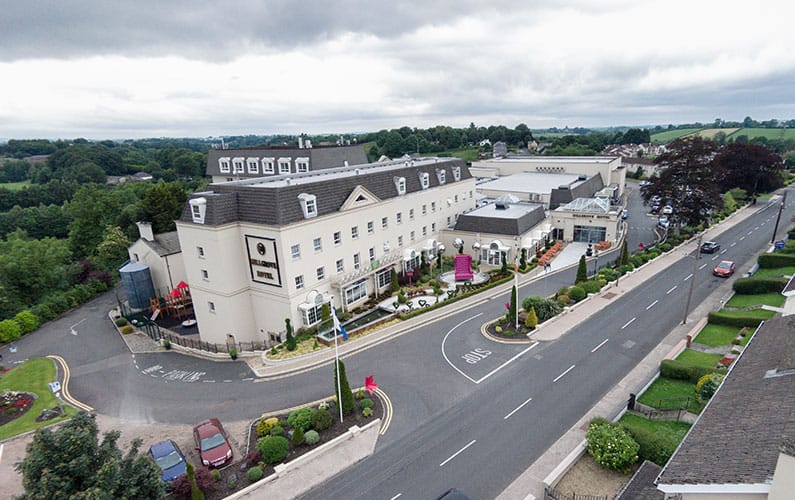
A sensory bedroom you can actually retreat to at bedtime
This was one of the hotels that made me realise how much more neuro-inclusive accommodation can be than simply putting a sensory room beside a Kids' Club.
Hillgrove is a four-star hotel on the outskirts of Monaghan town, with 87 bedrooms, a 20-metre heated indoor pool, children's pool, spa, leisure centre, outdoor play area, cinema room and family activities.
But its standout feature for this guide is its sensory bedroom.
Rather than requiring guests to leave their own room when they need sensory regulation, the environment they sleep in has itself been adapted.
The hotel describes the room as being designed for guests including those with autism and ADHD who may find it difficult to relax and switch off.
Different senses have been deliberately considered.
There are fragrances for smell; colourful moving lights, lava lamps and colourful linen for sight; different fabrics and soft items for touch; calming music through a dedicated television channel; and objects that move or respond to touch.
There's also a mobile sensory trolley containing a colour-command interactive panel, a waterless rainbow tube, vibrating cushion, ear defenders and fidget tubes.
Visual equipment includes an Aura Projector and fibre-optic lighting designed to create a starry-night effect.
That could be particularly valuable because bedtime can be difficult on holiday.
The normal routine has changed. The mattress feels different. The room smells different. The sounds outside the door are different.
Being able to regulate without having to leave the bedroom could be hugely helpful for some guests.
Who could it suit?
Families for whom sleep and settling in an unfamiliar bedroom are major challenges.
It may also appeal to children who use similar sensory equipment at home or school and find familiar sensory input reassuring.
Worth knowing: Sensory preferences are incredibly individual. Colourful moving lights and fragrances may be calming for one person and uncomfortable for another, so I'd ask the hotel what can be switched off or removed if particular stimuli are problematic.
6. Tullamore Court Hotel — County Offaly, Ireland
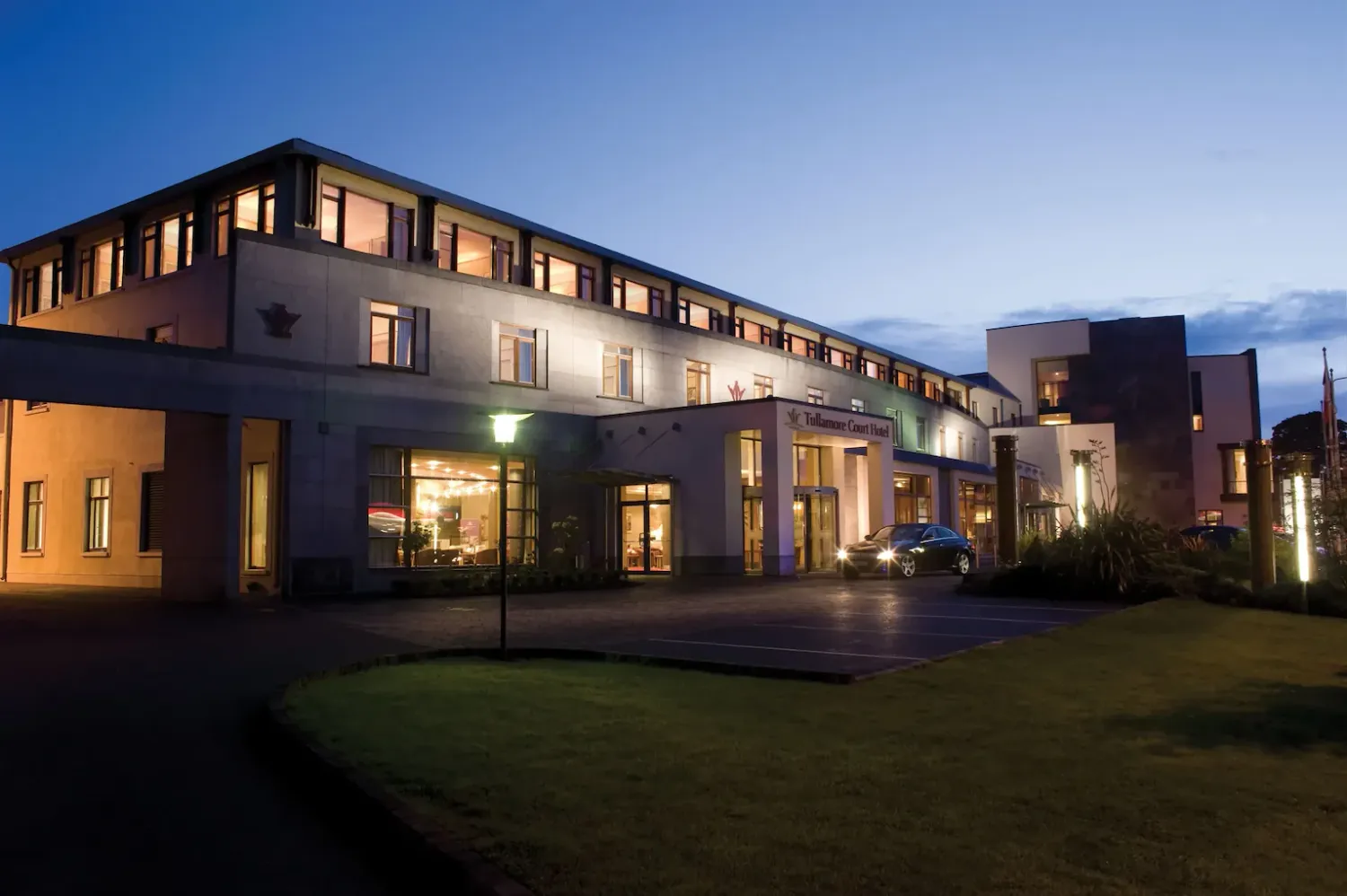
One of the options that actually acknowledges neurodivergent adults
Tullamore Court offers another dedicated sensory bedroom, but there was one line in the hotel's description that immediately stood out to me.
It describes the room as suitable whether travelling as a family or as adults.
It shouldn't be unusual.
But unfortunately, it still is.
The sensory bedroom can accommodate two adults and up to three children and has been designed for guests including those with autism and ADHD, as well as people with other needs that can make relaxing or switching off difficult.
Like Hillgrove, the room considers multiple senses through fragrance, colourful moving lights, tactile fabrics and soft furnishings, calming music and equipment that reacts to touch and movement.
There's also a mobile sensory trolley containing a colour-command interactive panel, waterless rainbow tube, vibrating cushion, ear defenders and fidget tubes.
The idea is to provide a private environment where guests can reduce overload and unwind without needing to access a separate children's facility.
Who could it suit?
Families needing sensory support within their own accommodation, but also neurodivergent adults who don't want their accessibility provision to revolve around children's facilities.
That could include couples, friends travelling together or an adult travelling with family who needs somewhere predictable and regulating at the end of the day.
Worth knowing: Again, don't assume “sensory” automatically means calming for everybody. I'd discuss individual sensory preferences with the hotel before booking the specialist room.
7. Slieve Russell Hotel — County Cavan, Ireland
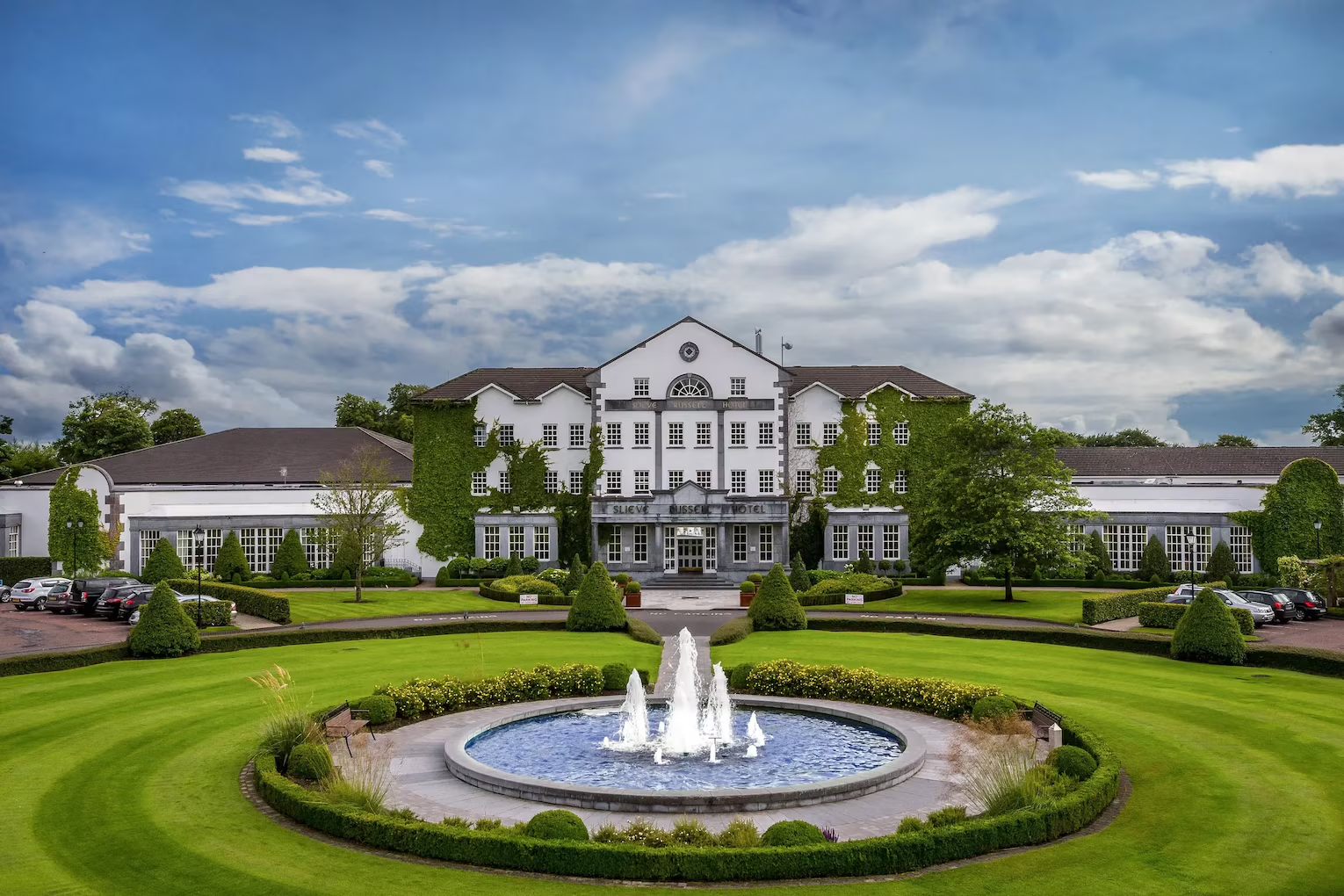
A hotel thinking about sensory accessibility before you've even checked in
One of the most useful things a hotel can give a neurodivergent guest doesn't cost millions and doesn't require specialist equipment.
It's predictability.
Slieve Russell explicitly describes itself as an autism-friendly hotel and provides a Social Story and Sensory Map so guests can visually familiarise themselves with their stay before arriving.
For somebody who finds new environments stressful, that preparation can remove a huge amount of uncertainty.
The hotel also encourages guests to complete online check-in before travelling, reducing the need to queue on arrival.
Once there, families can use a dedicated Sensory Soft Play Room.
The hotel explains that it deliberately upgraded its existing soft-play facility because hotels can be busy environments and some guests need somewhere quieter.
The multi-sensory room was designed around sight, movement and touch. It includes a bubble tube with bubbles and fish, a mirror disco ball, a soft-play step and slide and a tactile touch panel with padded corner.
It's available to hotel residents using their room key card and is intended for young children and guests with additional needs.
The wider property is a resort-style hotel with restaurants, leisure facilities, spa and golf, so again this isn't somewhere whose entire identity revolves around additional needs.
Who could it suit?
I'd particularly look at Slieve Russell for guests for whom uncertainty and transitions are as challenging as sensory input itself.
The Social Story could help prepare someone for what the hotel looks like and what will happen during the stay, while online check-in removes another potential point of stress.
Worth knowing: The sensory soft-play room is geared particularly towards younger children, so families with older children or adults should discuss what quieter-space options are available elsewhere in the hotel.
8. Marsham Court Hotel — Bournemouth, England
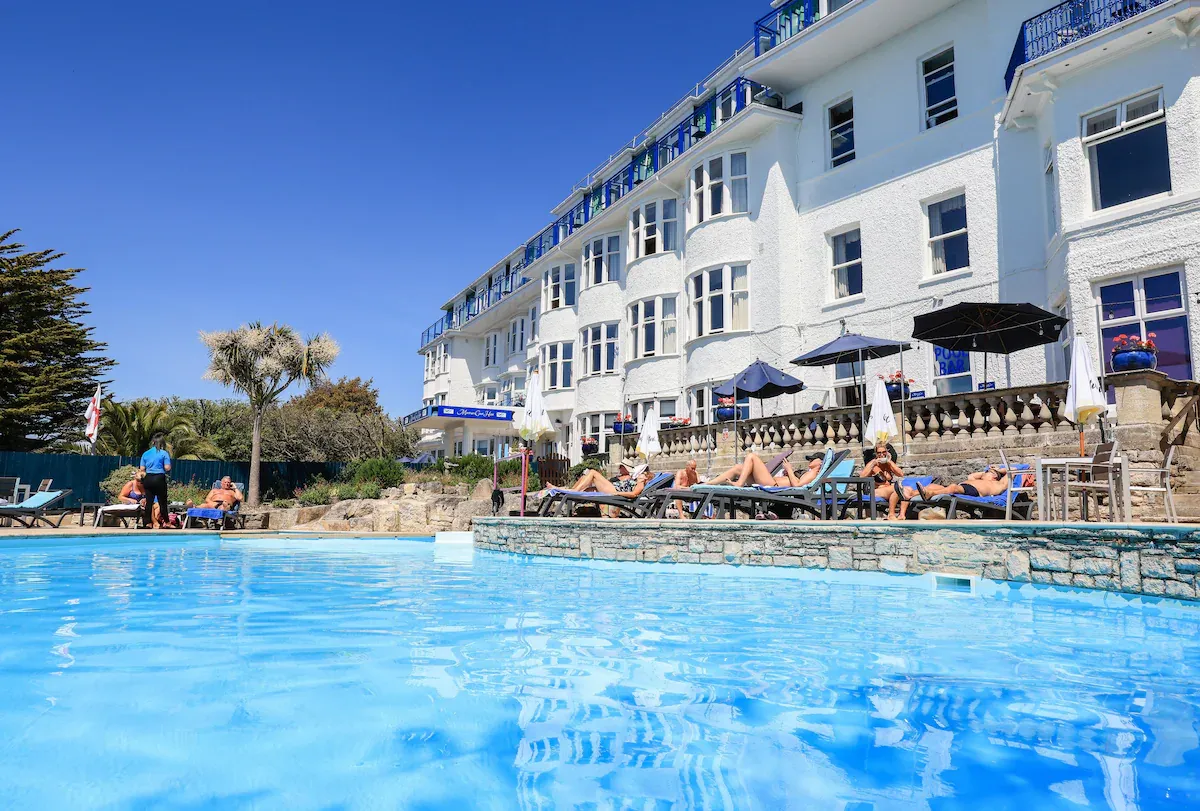
One of the most comprehensive approaches to accessibility on this list
Marsham Court is interesting because its sensory provision doesn't sit in isolation.
The Bournemouth seafront hotel has built the sensory room into a much broader accessibility programme.
Its purpose-built multi-sensory room is available to guests of different ages with additional needs and can be used for relaxation, de-escalation or gentle sensory stimulation.
The softly lit environment includes interactive visual, auditory and tactile features and provides somewhere away from the busier parts of the hotel.
Residential guests can currently use the room free of charge, although booking it through reception is recommended.
But look beyond that room and there's considerably more.
Marsham Court has selected accessible bedrooms and wet rooms, a fully equipped Changing Places toilet and shower, hearing loops, Blue Badge parking arrangements and accessible routes through key parts of the hotel.
There's an i-swim pool hoist and even access to a beach wheelchair.
For neurodivergent guests, one of the most useful features may actually be the information available before travelling.
The hotel provides virtual tours and accessibility videos covering public areas, corridors, selected bedrooms, routes from the car park and specialist facilities.
That means somebody who finds unfamiliar environments difficult can potentially look around parts of the hotel from home before ever walking through the door.
And I love that.
Who could it suit?
Families or adults with multiple accessibility requirements, particularly when neurodivergence sits alongside physical disability or mobility needs.
It's also a really interesting UK option for somebody who wants to test what works for them on a shorter break before committing to an overseas holiday.
Worth knowing: Marsham Court is an older Edwardian building and the hotel itself acknowledges that this creates some physical limitations. If accessibility is essential, speak to the hotel about the exact room and routes required rather than assuming every part of the building is accessible.
9. Ashling Hotel — Dublin, Ireland
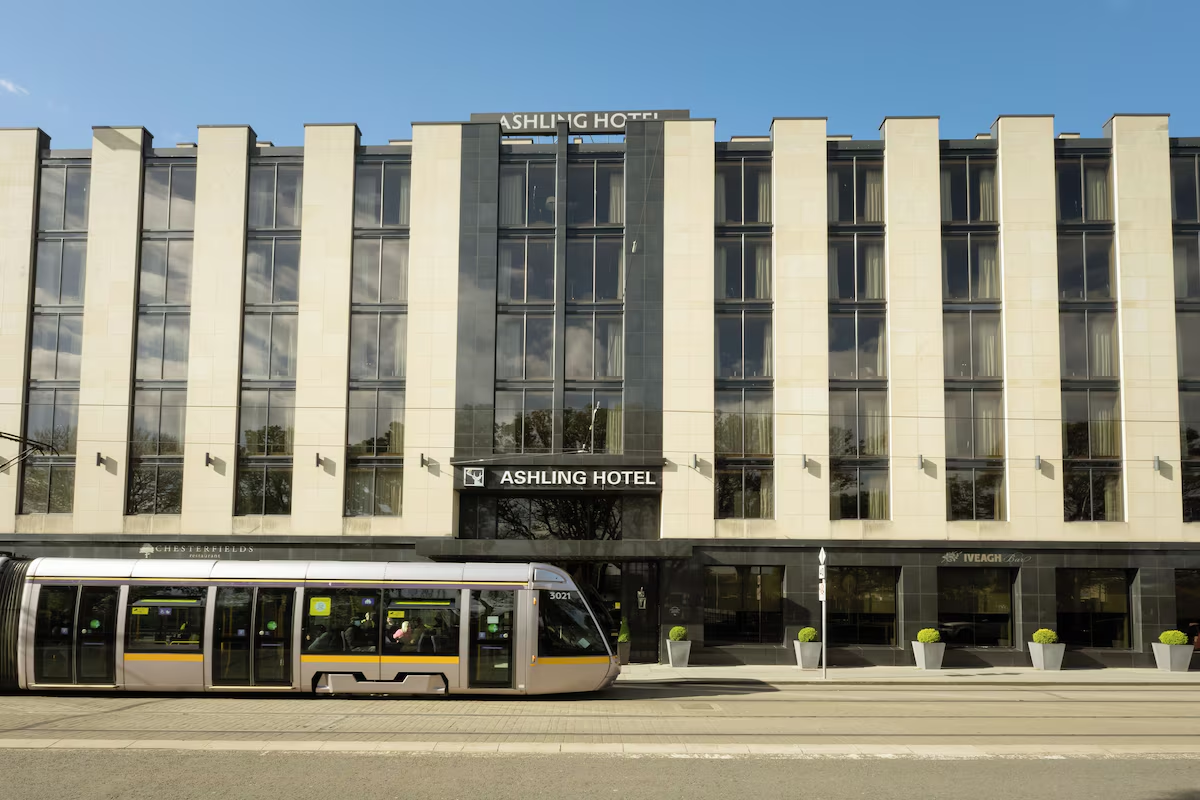
Proof that neuroinclusive travel doesn't have to mean a family beach resort.
This one is important because neurodivergent people don't only want to lie beside swimming pools.
Sometimes we want a city break.
Ashling Hotel says it was the first hotel in Dublin to introduce sensory guestrooms, developed in collaboration with AsIAm, Ireland's autism charity.
And these aren't simply standard bedrooms with a box of fidget toys added afterwards.
The rooms have been deliberately equipped to create a more calming sensory environment.
Features include a bubble tube with acrylic mirror panels, a memory-foam beanbag, weighted lap pad, soft vibrating cushion, LED mood cube with Bluetooth speaker, aroma diffuser with colour-changing light, organic aroma oils and a fidget box containing sensory toys.
There's also Chromecast television access, allowing guests to use familiar entertainment through services such as Netflix and Amazon Prime.
The room accommodates a family of four with one double and two single beds.
I particularly like the idea of having familiar entertainment available in the room. Sometimes regulation isn't about specialist equipment at all — it's watching the same programme you've watched 47 times because you know exactly what happens next.
Who could it suit?
Families wanting a Dublin city break but needing a private decompression space to return to after sightseeing.
The room itself may also appeal to guests who benefit from weighted pressure, tactile equipment or familiar sensory routines.
Worth knowing: Some of the equipment — particularly fragrance and changing lights — won't suit every sensory profile. Discussing what can be removed or turned off before arrival would be sensible.
10. Gran Hotel Luna de Granada — Granada, Spain
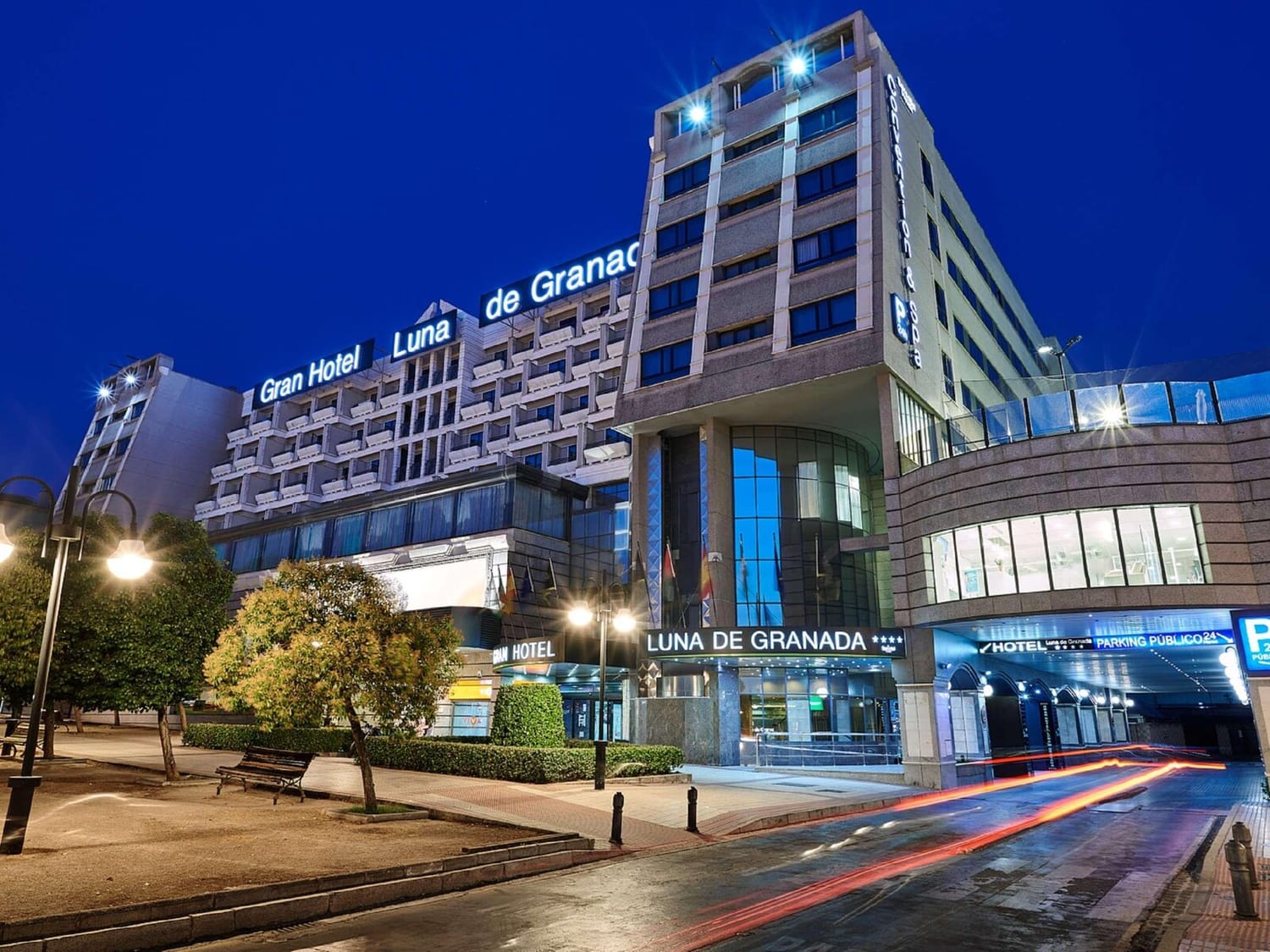
Neuroinclusion that focuses on communication and predictability, not just sensory equipment.
This is probably the most different hotel on the list — and that's exactly why I've included it.
Gran Hotel Luna de Granada is part of deLuna Hotels, which has achieved Autism Friendly certification across its hotels.
Rather than concentrating primarily on a sensory room, deLuna's approach looks at how an autistic guest actually moves through and communicates within a hotel.
Staff receive autism and neurodivergence awareness training.
There is adapted signage and pictograms to make navigating the hotel clearer.
Visual supports and easy guides are available, and the hotel offers a fast check-in process.
Even the food experience has been considered.
Gran Hotel Luna de Granada provides adapted restaurant and breakfast menus using pictograms, helping remove some of the communication barriers that can make ordering food stressful.
Perhaps most interestingly, guests can provide information about their individual requirements before the stay.
The hotel's accessibility form asks questions including whether the guest uses verbal language, their likes and interests, what calms them, and what situations may cause distress.
That is exactly the sort of individual approach I'd like to see more often.
Instead of:
"This person is autistic, therefore they need X."
It's asking:
"What does this particular person need?"
And those are two very different approaches to inclusive travel.
Who could it suit?
Neurodivergent travellers who benefit particularly from clear communication, visual information, predictable processes and staff awareness.
It's also one of the strongest options on this list for a city break rather than a traditional resort holiday.
Worth knowing: Its approach is different from hotels offering elaborate sensory bedrooms. If a dedicated sensory retreat is essential, I'd confirm what's available rather than assuming Autism Friendly certification automatically means there is one.
So, what actually makes a hotel neurodivergent-friendly?
After looking at all of these hotels, one thing becomes very clear.
There isn't a single answer.
A sensory room is fantastic for somebody who benefits from it.
But it doesn't automatically make the rest of a hotel neuroinclusive.
An autistic guest might struggle far more with the unpredictability of check-in than with sensory input.
Someone with ADHD may find queuing particularly difficult.
One child may need ear defenders in the restaurant.
Another might actively seek the noise and movement of the busiest swimming pool.
Someone may have a very limited range of safe foods.
Another may be completely fine with food but unable to sleep unless their environment is predictable.
And that's why I think we need to look beyond the label.
When researching a hotel for a neurodivergent traveller, these are some of the things I'd be looking at:
Sensory or low-stimulation spaces
Sensory bedrooms
Staff neurodiversity training
Visual communication aids
Social Stories and sensory maps
Pictograms and clear signage
Pre-arrival photographs and virtual tours
Sensory bags, ear defenders and regulation equipment
Quiet or alternative dining arrangements
Flexibility around food and routines
Alternative or faster check-in
Information about noise and particularly busy areas
Room-location options
Children's activities that can be adapted
A named person who understands neurodivergent requirements
And, crucially, a willingness to ask the traveller what actually helps them
Because neurodivergent-friendly shouldn't mean:
“We have a sensory room.”
It should mean:
“Tell us what would make this experience work better for you.”
What about neurodivergent adults?
This deserves saying separately.
A huge amount of neuroinclusive travel provision is still designed around children.
And supporting neurodivergent children to experience holidays is absolutely brilliant.
But neurodivergent children grow into neurodivergent adults.
Those adults might travel alone, with friends, with a partner, with their own children or as part of a larger family.
They might love busy cities.
They might love nightclubs.
They might want adults-only luxury.
They might want adventure holidays.
Or they might want seven days lying beside the quietest swimming pool known to humankind with nobody attempting to organise a poolside game anywhere near them!
Being neurodivergent doesn't dictate what kind of holiday somebody wants.
It simply means we need to get better at removing the barriers that can make accessing that holiday unnecessarily difficult.
I'd love to see more adult-focused hotels follow the examples we're beginning to see here.
TUI's nine European sensory-room hotels for 2026
It's worth mentioning that I've only included four TUI BLUE properties in my ten because I wanted this guide to show different approaches rather than turn into a list of TUI hotels.
But TUI currently has nine European properties with dedicated sensory rooms:
Cyprus
TUI BLUE Nausicaa Beach
TUI BLUE Atlantica Aeneas Resort
Turkey
TUI BLUE Tropical
TUI BLUE Palm Garden
Ibiza
TUI BLUE Aura
Gran Canaria
TUI BLUE Orquídea
TUI BLUE Playa Feliz
TUI BLUE Las Pitas
TUI BLUE Tres Vidas
The wider programme also includes neurodiversity-trained Kids' Club teams, specialist SENNIES support, communication cards, visual supports, Neurodiversity Champions, sensory bags and dedicated sensory activities.
It's a significant step towards neuroinclusive support becoming part of mainstream package holidays rather than something families have to hunt down themselves.
How do you choose the right hotel?
This is probably the most important part of this entire article.
Don't begin with the diagnosis.
Begin with the person.
Think about previous holidays, days out, restaurants or unfamiliar environments.
What actually caused difficulty?
Was it:
The crowds?
Noise?
Queuing?
Food?
Transitions?
Not knowing what was happening next?
Sleeping somewhere unfamiliar?
The airport?
The buffet restaurant?
Bright lights?
Children's entertainment?
Changes to routine?
Having nowhere private to decompress?
Once you know where the barriers are, it becomes much easier to look for a holiday that removes as many of them as possible.
And that means the hotel with the fanciest sensory room isn't automatically the best hotel for you.
For one family, Slieve Russell's Social Story and online check-in might be far more valuable.
For another, Hillgrove's sensory bedroom could be the thing that finally makes sleeping away from home manageable.
For someone else, the communication support and trained staff at Gran Hotel Luna could matter most.
And another family might need somewhere like Atlantica Aeneas because one child needs constant activity while their sibling needs somewhere to escape it.
That's what genuinely personalised inclusive travel should look like.
Looking for a neurodivergent-friendly holiday?
At Snowbirds Travel, I believe inclusive travel starts with understanding the traveller rather than simply finding a hotel with an accessibility label.
If you're neurodivergent yourself, travelling with a neurodivergent child or planning a holiday for somebody with additional needs, tell me about the things that usually make travelling difficult.
Sometimes the first question doesn't need to be:
“Where do you want to go?”
It can be:
“What would make going away easier?”
From there, we can look at destinations, hotels and travel arrangements that work with your needs rather than against them.
Because an inclusive holiday shouldn't simply mean finding somewhere willing to accommodate you.
It should mean finding somewhere you can actually enjoy being on holiday.
Please note: hotel facilities, programmes and accessibility arrangements can change. Any facility or adjustment that's essential to your holiday should always be confirmed before booking.